



MARC JACOBS
Hutch Post
HUTCHINSON, Kan. — The recent confirmation of a New World screwworm case in Texas is raising concerns throughout the livestock industry, prompting federal officials to intensify efforts to prevent the destructive pest from spreading further into the United States.
Nathan Steudle, Farm Director at KFEQ Radio in St. Joseph, Missouri, said the development was not unexpected, as agricultural officials have been monitoring the pest's gradual movement northward for more than a year.
“They've seen it coming, and it's been creeping ever closer,” Steudle said during a recent interview.
The U.S. Department of Agriculture has already activated a sterile fly program designed to combat the pest. The strategy involves releasing sterilized male flies into affected areas to reduce reproduction and eventually eradicate the population.
According to Steudle, facilities producing sterile flies have been operating since February and are capable of releasing up to 300 million sterile flies per week to target the screwworm population.

The New World screwworm was successfully eradicated from the United States in the 1960s through a similar program. However, the pest has gradually moved northward from Central America and has now been detected in South Texas.
The insect poses a serious threat to livestock because female flies lay eggs in open wounds on animals. After hatching, the larvae feed on living tissue, potentially causing severe injury or death if left untreated.
While the pest is not contagious from animal to animal like a viral disease, Steudle noted that large cattle operations remain vulnerable because flies can easily spread between locations.
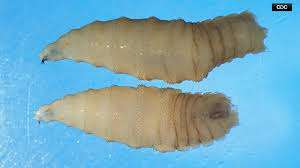
Federal officials have established a 20-kilometer surveillance and containment zone around the confirmed Texas case. Increased monitoring, livestock movement restrictions and additional inspections are also in place.
Steudle said the discovery comes at a particularly challenging time for the cattle industry, which is already dealing with historically low herd numbers.
“We've got the smallest cattle herd we've had since the early 1970s,” he said.
Any significant spread of the screwworm could further tighten cattle supplies and drive up beef prices. Steudle noted that higher beef prices would likely ripple through the broader protein market as consumers shift to alternatives such as pork, chicken and fish.
“When the price of beef climbs too high, people look for alternative proteins,” Steudle said. “All of those prices will increase also because demand increases.”
Steudle emphasized that the threat is primarily economic and agricultural rather than a food safety issue. The flies do not affect fruits or crops and do not pose a direct threat to the nation's food supply.
In addition to livestock concerns, Steudle discussed improving soybean export demand. He pointed to recent purchases by China as a positive sign for U.S. soybean producers.

According to trade data, China imported more than 3.3 million metric tons of U.S. soybeans during April, compared with approximately 1.3 million metric tons during the same month a year earlier.
The increase comes despite ongoing trade tensions between the United States and China and follows commitments by Chinese officials to continue purchasing American agricultural products.
Steudle said stronger export demand could help support soybean prices after recent market declines tied largely to weather concerns and crop conditions.
He also highlighted the upcoming review of the United States-Mexico-Canada Agreement, or USMCA, which begins July 1. The trade pact, which replaced NAFTA, governs agricultural trade among the three countries.
Steudle said negotiations with Mexico appear to be progressing smoothly, while discussions with Canada may prove more challenging due to ongoing disputes involving dairy products and tariffs.
“A lot of ag export stuff needs that to be successful,” Steudle said. “It creates a little bit of certainty for producers.”
Agricultural leaders across the country will be closely watching both the screwworm containment efforts and the upcoming trade negotiations as producers navigate an already challenging economic environment.