


SHELBY PRIDDLE
Assistant Director of Communications, Kansas Wheat
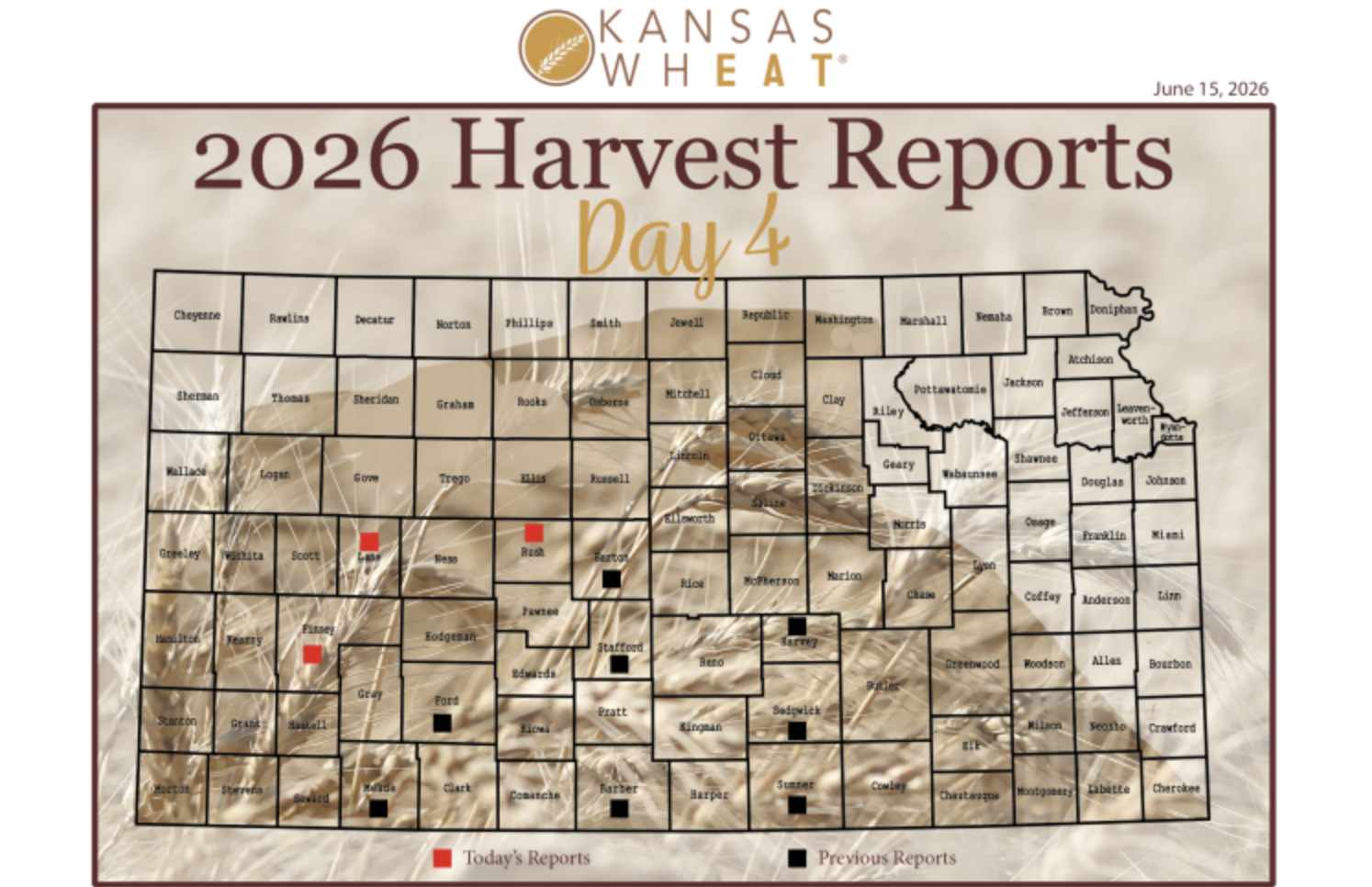
This is day 4 of the Kansas Wheat Harvest Reports, brought to you by the Kansas Wheat Commission, Kansas Association of Wheat Growers, Kansas Grain and Feed Association and the Kansas Cooperative Council.
Harvest is well underway across the state, with progress varying by region. According to the USDA’s National Agricultural Statistics Service crop progress report ending June 14, 2026, the Kansas wheat harvest is 28 percent complete, well ahead of last year. Winter wheat conditions were rated 25 percent very poor, 32 percent poor, 29 percent fair, 14 percent good and 0 percent excellent.
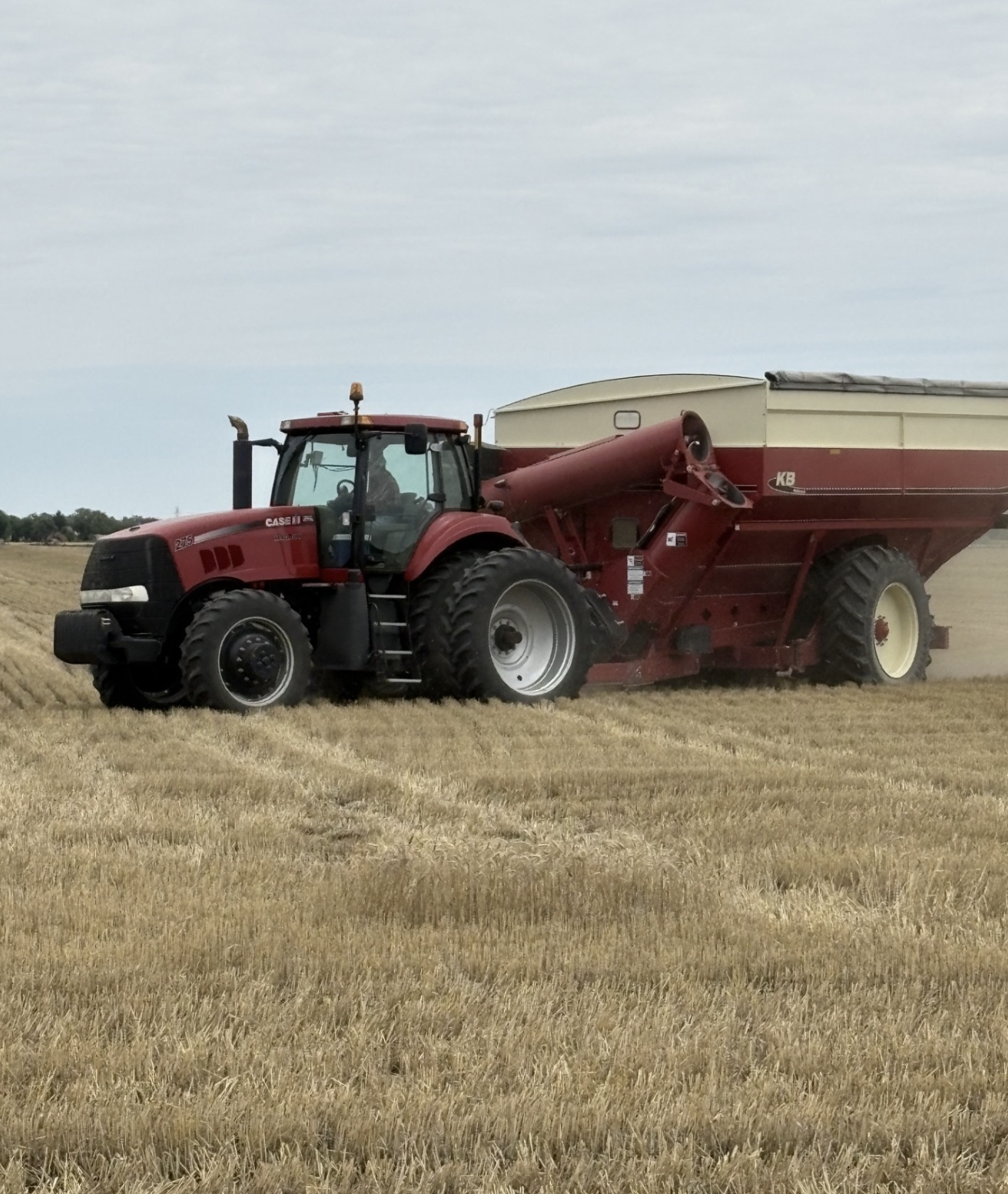
Despite early predictions, in a few locations, yield is fairing better than initially thought, according to farmer Dale Younker in Rush County.
“In areas that were fortunate to catch a timely rain amidst the drought, wheat is yielding better than what could have been,” said Younker. “That has been a pretty pleasant surprise for some people.”
Between the drought and hail damage, there have been challenges this harvest season for Younker; as for grain quality, his first load reported a test weight of 63.2 and 12.7 protein.
“We don’t have the exact yield for that particular field, and it had about 20 percent hail damage,” said Younker. “But I estimate the yield for it would be in the 50s.”

Ron Suppes, a farmer from Lane County, began harvesting around June 11 and is estimating that he is around an eighth of the way done. Suppes reported having disappointments, but has had some test weights of 61 and yields of 50 bushel per acre.
“The big challenge was having 5-7 inches of rain a few days ago,” said Suppes. “It ruined some of the wheat with hail and flooded fields.”
Lindie McMillan, Vice President of Grain at Garden City COOP, reported that they took in their first load on June 6, but harvest really got going in the last few days. She estimated that in her area, harvest was 25 percent complete with better quality than expected, and decent test weights across the region.
“The story of the year is variability,” said McMillan. “Something that really stings is that the stands in the fall were really beautiful, and a combination of the warmer-than-normal winter and no moisture in the spring led to a below-average crop.”
The 2026 Harvest Report is brought to you by the Kansas Wheat Commission, Kansas Association of Wheat Growers, Kansas Grain and Feed Association, and the Kansas Cooperative Council. To follow along with harvest updates on X, use #wheatharvest26. Tag us at @kansaswheat on Facebook, Instagram and X to share your harvest story and photos.