


MANHATTAN, KAN. - A Kansas State agronomist is encouraging producers to get out, scout fields, and prioritize harvest to prevent more grain quality losses.
November rainfall across Kansas created a challenge for soybean producers as wet conditions delayed harvest and raised concerns about seed quality.
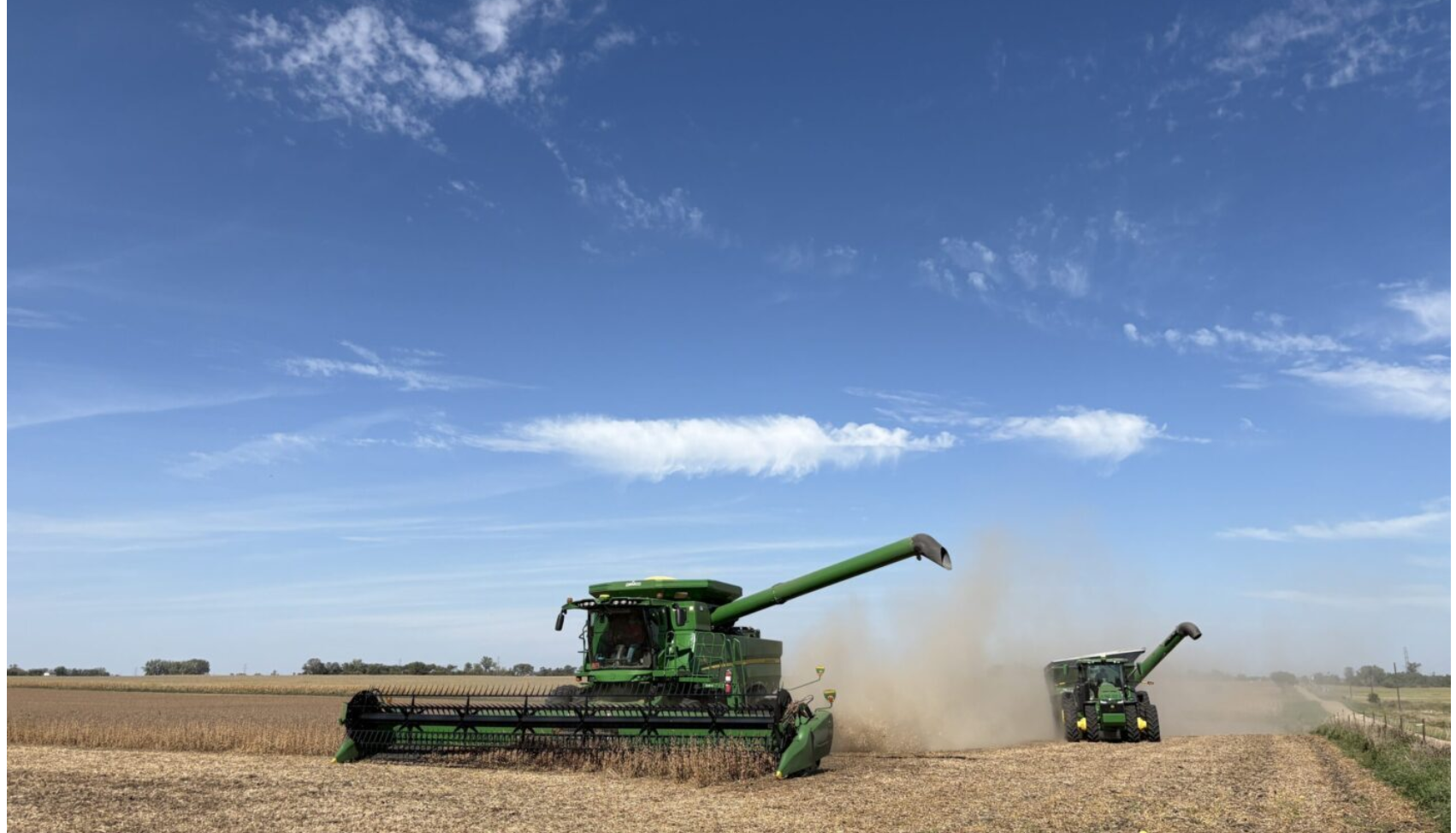
Kansas State University Extension agronomist Logan Simon said repeated wetting and drying of mature soybeans has contributed to widespread reports of seed discoloration, mold, sprouting and pod shattering.
“We’re all seeing quite a bit of wet weather, and that is definitely producing some complications for all of our row crops, (including) corn, soybeans, sorghum and cotton,” Simon said.
One of the most common concerns reported by soybean producers is purple seed stain, a fungal disease that causes a distinct purple discoloration on soybean seed coats.
“Generally, that’s not super uncommon,” Simon said. “Certainly, we do see that in some fields every year in Kansas. But this year it’s very widespread.”
Although purple seed stain can be alarming for producers during harvest, Simon said the discoloration does not necessarily indicate a significant decline in seed quality.
Other seed diseases, however, can present greater concerns.
Diaporthe seed decay, a fungal disease that produces chalky white growth on soybean seeds, can cause shriveled grain, reduced test weight and poorer overall seed quality.
Simon said producers may also encounter soybeans sprouting within their pods as repeated rainfall causes mature seeds to absorb moisture and begin germinating.
“So that is a concern that we are seeing as well, though not nearly as common,” he said.
Wet conditions can also increase pod shattering, which occurs when mature soybean pods split open and release seeds before harvest.
While modern soybean varieties have improved resistance to shattering, Simon said prolonged wetting and drying can increase the likelihood of losses.
Grain quality may affect marketing and storage
As producers deliver soybeans to elevators, some may encounter price discounts due to declining grain quality.
Simon said sprouted soybeans are particularly concerning because they can contribute to foreign material assessments, resulting in significant dockage.
“We have been seeing some folks come back with dockage, especially in cases where we’ve got presence of seed decay,” Simon said.
Although quality concerns have resulted in discounts, Simon said he had not heard reports of complete grain rejections at elevators.
For producers considering on-farm storage, Simon recommends evaluating the condition of harvested grain before deciding where to store it.
Soybeans showing purple seed stain may present fewer storage concerns than those exhibiting active fungal growth.
“If you are seeing actual seed decay and you’re seeing chalky mold on those seeds as they’re coming out, we really need to be getting that out into the elevator as quickly as possible,” he said.
He added that producers storing affected grain should have the ability to dry rapidly and reduce moisture to safe storage levels, below 13%.
Grain bagging, which has become increasingly common across Kansas, may present additional risks for soybeans already exhibiting mold growth.
“The quality of that seed is never going to improve coming back out of the bag,” he said.
Scouting helps prioritize harvest
Although soybean quality concerns have been reported across Kansas, Simon said damage can vary significantly between fields and even within individual fields.
Field edges may show more severe symptoms than areas closer to the center, making scouting an important step before harvest.
“None of these things are ever going to be completely uniform,” Simon said.
Rather than harvesting fields based solely on location or convenience, Simon encourages producers to prioritize those showing signs of declining seed quality.
Fields experiencing mold development, sprouting or increased shattering should be harvested ahead of fields maintaining better grain quality.
“This is one of those years where prioritizing rather than just whatever’s closest to us is probably going to really pay for us as we’re dealing with less than stellar grain quality across the board,” he said.
More information on soybean harvest and diseases is available online from K-State Extension or from local extension offices in Kansas.