


To the Fort Hays State University Community:
I need to share a difficult decision with you, and I want to be transparent about how we arrived here, what it means, and who ultimately holds the power to change the path we are on.
The Decision
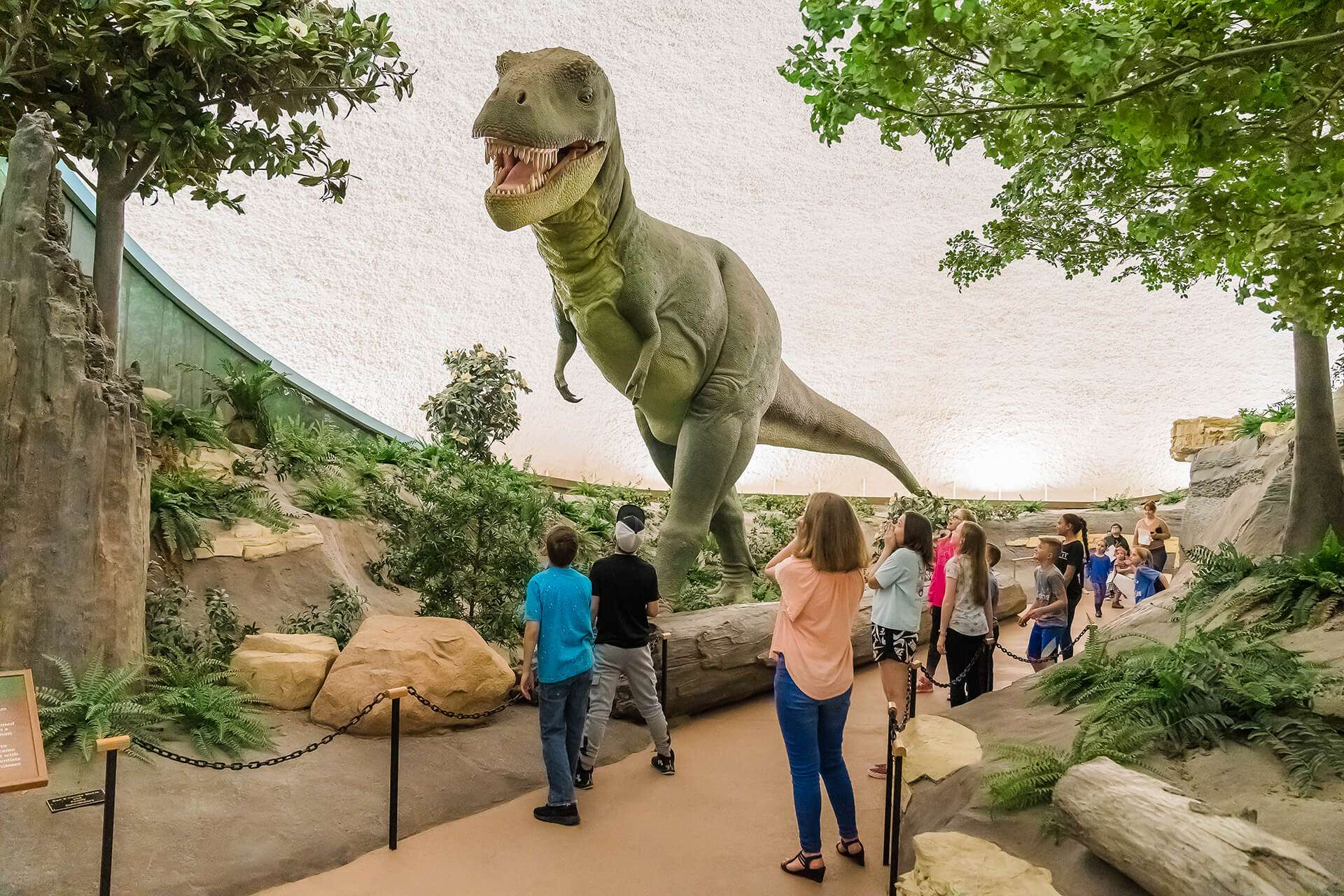
After careful deliberation, I have decided to close the public-facing operations of the Sternberg Museum as part of our Strategic Budget Alignment process. The closure of public operations will take effect on December 18, 2026. Museum faculty and staff will remain on appointment for this year, and we will reassess our staffing needs for the future. During this time, the faculty and staff will focus their work on helping us review our collections, determine what must be retained for active research and teaching, and work with appropriate organizations to ensure every specimen is handled responsibly and legally.
This is not a decision I make lightly. The Sternberg Museum is woven into the identity of this university and this region.
The Why
During the last legislative session, FHSU received a $2.4 million recurring reduction in state funding. That cut alone requires us to remove $2.4 million from our recurring base budget. On top of that, legislators are asking us to identify an additional 10% administrative reduction and are considering deeper cuts this session. Legislation was introduced last session that would limit our ability to teach international students. Should similar legislation pass, it could put at least another $6 million of our budget at risk.
I want to be clear about what closing Sternberg is and is not. It is not the cause of our budget problem; it is the result of the $2.4 million legislative budget cut. Closing the Sternberg Museum saves roughly $850,000, just over a third of that gap, and is the largest single piece of our solution. Combined with approximately $1 million in other cuts identified across the university, we have identified about $1.85 million, leaving roughly $550,000 still to find. When you cut into your leanest, most efficient state university, you are not trimming excess. You are cutting into muscle.
Meanwhile, the building that houses the Sternberg Museum faces more than $20 million in deferred maintenance, a capital liability separate from the operating numbers below.
The museum itself has not been financially stable for some time. On average, it spends about $1.3 million a year and generates about $470,000 in revenue (visitors, memberships, grants, and sales). Last year the subsidy was $855,990. Over the past decade, the annual subsidy averaged about $835,000. For a university that is already the leanest operator among the Kansas Board of Regents universities, that is not a gap we can close on our own.
And unlike most public institutions in Kansas, FHSU has no local property or sales tax revenue to fall back on. We have explored many financing tools available to us: STAR bonds, a dedicated property or sales tax levy, federal museum funding, and none has proved viable. Currently, no individual, foundation, or government entity has stepped forward to assume the museum's operations or underwrite its costs. However, we remain open to these potential solutions and are actively pursuing them. We are also partnering with the FHSU Foundation. None of this was a crisis while the university's base budget was stable. The cut is what turned a chronic gap into one we cannot close.
During this academic year, while we work through our collections, I am open to solutions and welcome conversations and ideas. But let me be direct about what any solution requires: the University would need about $1 million in new revenue every year. Not once, but annually, in perpetuity. This is a recurring cost, and it will not be solved by a one-time gift, a single fundraiser, or any single event. It also assumes that the current revenue will be sustainable for the future should we find the funding.
That figure is not arbitrary. It reflects last year's subsidy of $855,990, which has been as high as $919,771 in the past decade. We also need to think about staff raises and inflation that push that number upward every year. The museum's annual subsidy and the savings from closing it are nearly the same amount. The only real question is who covers it. And that $1 million does not address the building's needs; it would, however, be enough only to buy us some time.
What has been done
Since the $2.4 million cut, we launched a deliberate Strategic Budget Alignment process grounded in three pillars: Strategic Stopping: stop what does not clearly and directly serve students; Financial Efficiencies: sustain what does serve students more efficiently; and Strategic Reimagining: reimagine how we serve students better.
We reorganized the Office of the President, reducing staff and payroll. We moved ROAR magazine to the Foundation. We stepped down as the state host for the Small Business Development Center. We paused men’s and women’s golf. We chose not to create a new Entrepreneurship Director position. We have continued investing in student success and in academic program growth areas.
We also identified about $1 million in other cuts across the university. We still have more cuts to reach the $2.4 million legislative budget reduction.
Salaries are critical to keeping the faculty and staff the academic mission depends on. The museum serves both internal academic needs and the external community. While we work to keep our tuition low, in alignment with our mission, we are at a crossroads regarding what we ask tuition to cover.
Some will ask how I can argue that students shouldn’t fund the museum when tuition has gone up. Fair question. Tuition went up so we could keep academic programs whole — and it still left us an affordable institution in Kansas. That is a different use of the same dollar.
The How
As I indicated at convocation, every decision in this process follows a clear communication plan: those directly affected are informed first, then university leadership, including our senate presidents, then the broader community. Accordingly, I stayed silent until I could meet with the museum faculty and staff directly, which I did earlier today.
As part of our approach, the museum will close to the public so that our faculty and staff can focus on the work that must be done responsibly; reviewing our collections, identifying specimens tied to active research and current teaching, and determining the most responsible treatment of every item. We will engage appropriate experts to work with our museum faculty and staff. There is no intent to rush any of this.
Where this decision really comes from
The frustration in our community right now is real, and it is understandable. However, its true source is not a disagreement about whether Sternberg belongs in our academic mission. It does; that was never in question. The real source is a funding model that has asked more of FHSU than it asks of its peers, and a set of legislative decisions that made $2.4 million in cuts, with more likely on the way.
State Funding per FTE (FY25):
Source: KBOR Data Book
Emporia State University $19,379
Kansas State University $11,664
Pittsburg State University $11,540
Wichita State University $10,421
University of Kansas $ 8,423
Fort Hays State University $ 6,713
The legislature did equalize our reduction with Emporia State and Pittsburg State at $2.4 million; a fair outcome against the original bill, which would have cut us more deeply than either. But the same dollar figure is not the same burden. Because FHSU already operates more efficiently than its peers, a flat cut removes a larger share of what we have and falls on a budget with less room to absorb it.
The numbers make the point better than any of us can. By every efficiency measure we can point to, FHSU is the leanest operator in the system: our general-use expenditure per credit hour is $288. That efficiency is the product of years of disciplined stewardship, not circumstance.
General Use Expenditures per Credit Hour (FY25):
Source: KBOR Data Book
Fort Hays State University remains a remarkable institution. We are the most efficient university in the state. We bring $240 million annually to the Hays and Ellis County community. We educate many professionals who serve this region, and museums like Sternberg have been part of how we do that.
But efficiency and sacrifice have limits. We cannot absorb repeated, deep legislative reductions and simultaneously preserve everything our community values. Those are choices with real consequences, and those consequences fall first on the people who had no part in making them.
What you can do
If you care about the Sternberg Museum, and if you care about keeping a quality, affordable public university in western Kansas, I ask you to make your voice heard where it can change the outcome.
Contact legislators. Tell them what FHSU means to you, what Sternberg means to you, and ask them to stop cutting the funding that keeps both alive. Ask them to support protecting FHSU from further reductions and equalize our funding.
That pressure belongs in Topeka and not on the faculty, staff, and students who are working every day to fulfill our mission with less.
I will continue to communicate openly as this process unfolds. I know these are hard days. I know the museum holds memories for many of you. I share those, and I share your commitment to this institution. Together, we will get through this, and we will keep fighting for the university our community deserves.
With respect and gratitude,
Tisa
Tisa Mason| President
Fort Hays State University