


MARC JACOBS
Hutch Post
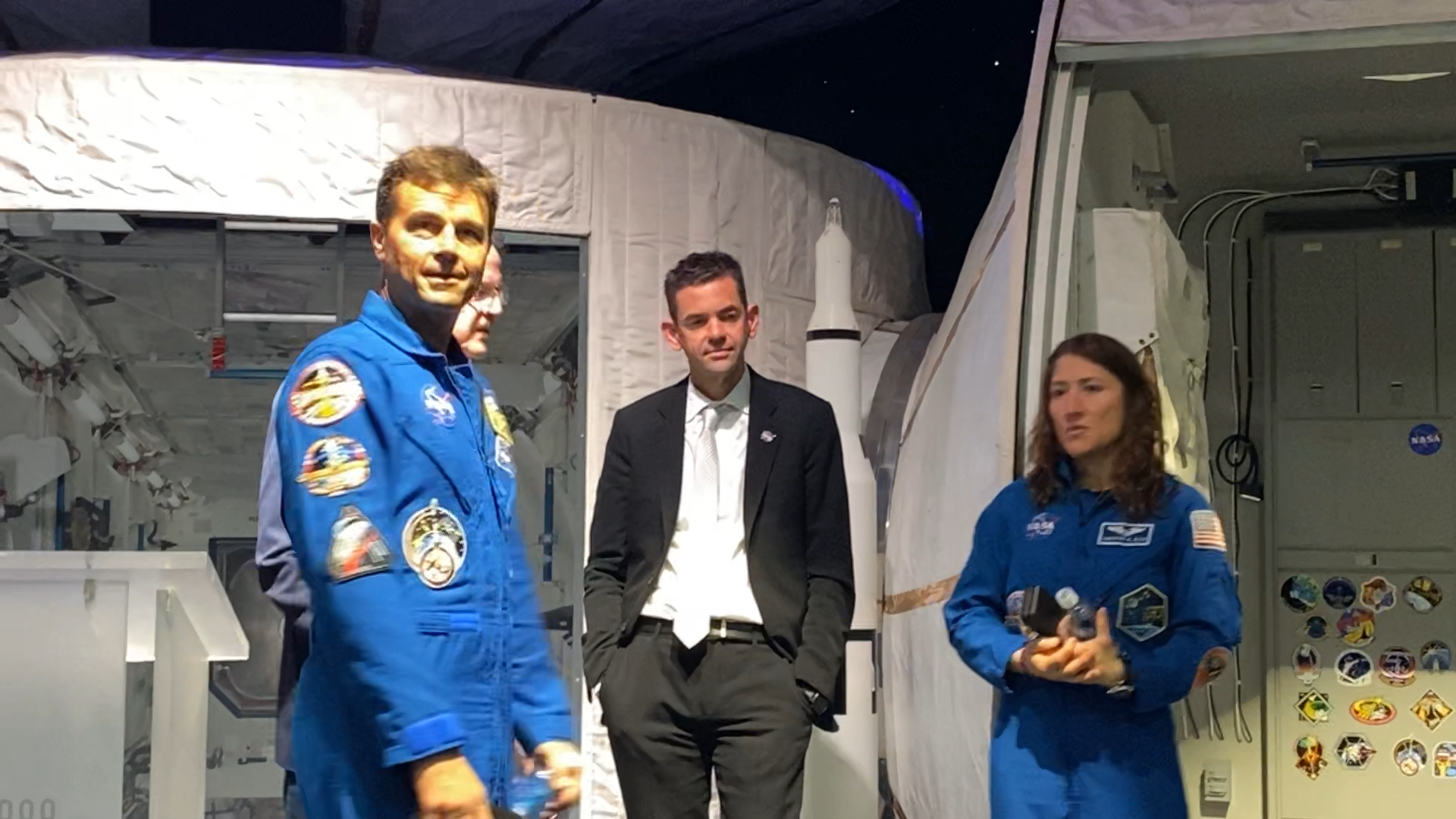
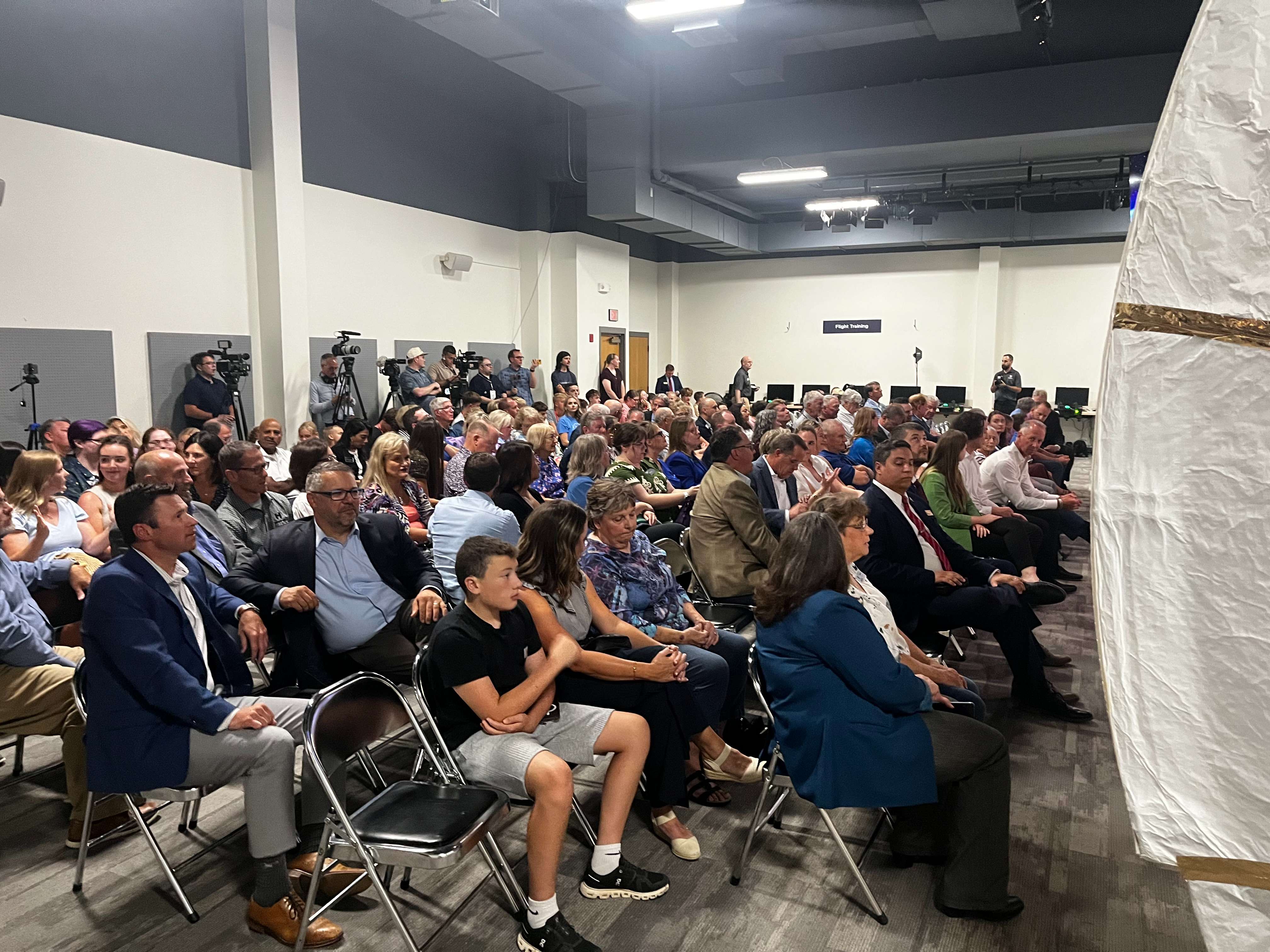
HUTCHINSON, Kan. — The Cosmosphere welcomed two Artemis II astronauts and NASA's administrator to Hutchinson Tuesday for an event highlighting the historic lunar mission, the future of American space exploration and the importance of inspiring the next generation to pursue careers in science and aerospace.
Artemis II Commander Reid Wiseman and Mission Specialist Christina Koch were joined by NASA Administrator Jared Isaacman and U.S. Sen. Jerry Moran. Cosmosphere President and CEO Jim Remar also spoke during the event.
Moran has worked to bring NASA officials and astronauts to Hutchinson as part of an effort to showcase the Cosmosphere and expose Kansas students to careers in science, technology, engineering and mathematics.
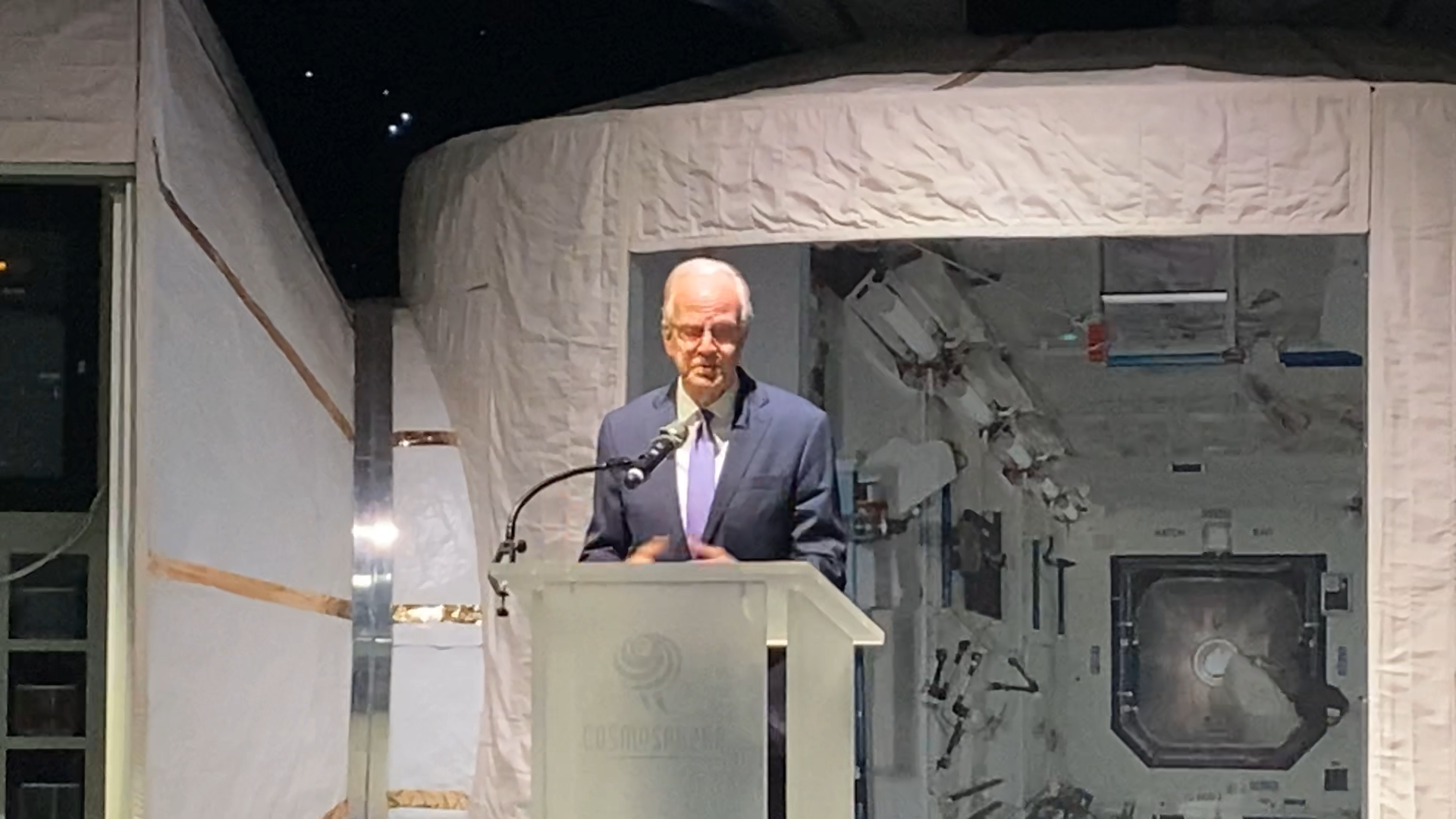
Remar emphasized the educational impact those visits can have, saying previous astronaut appearances at the Cosmosphere have prompted some students to reconsider their career plans and express an interest in becoming astronauts themselves.
"These visits matter to our nation's future and the future of those in this audience," Remar said.
Isaacman praised the Cosmosphere and discussed NASA's plans following Artemis II, saying the mission was only the beginning of the agency's next era of lunar exploration.
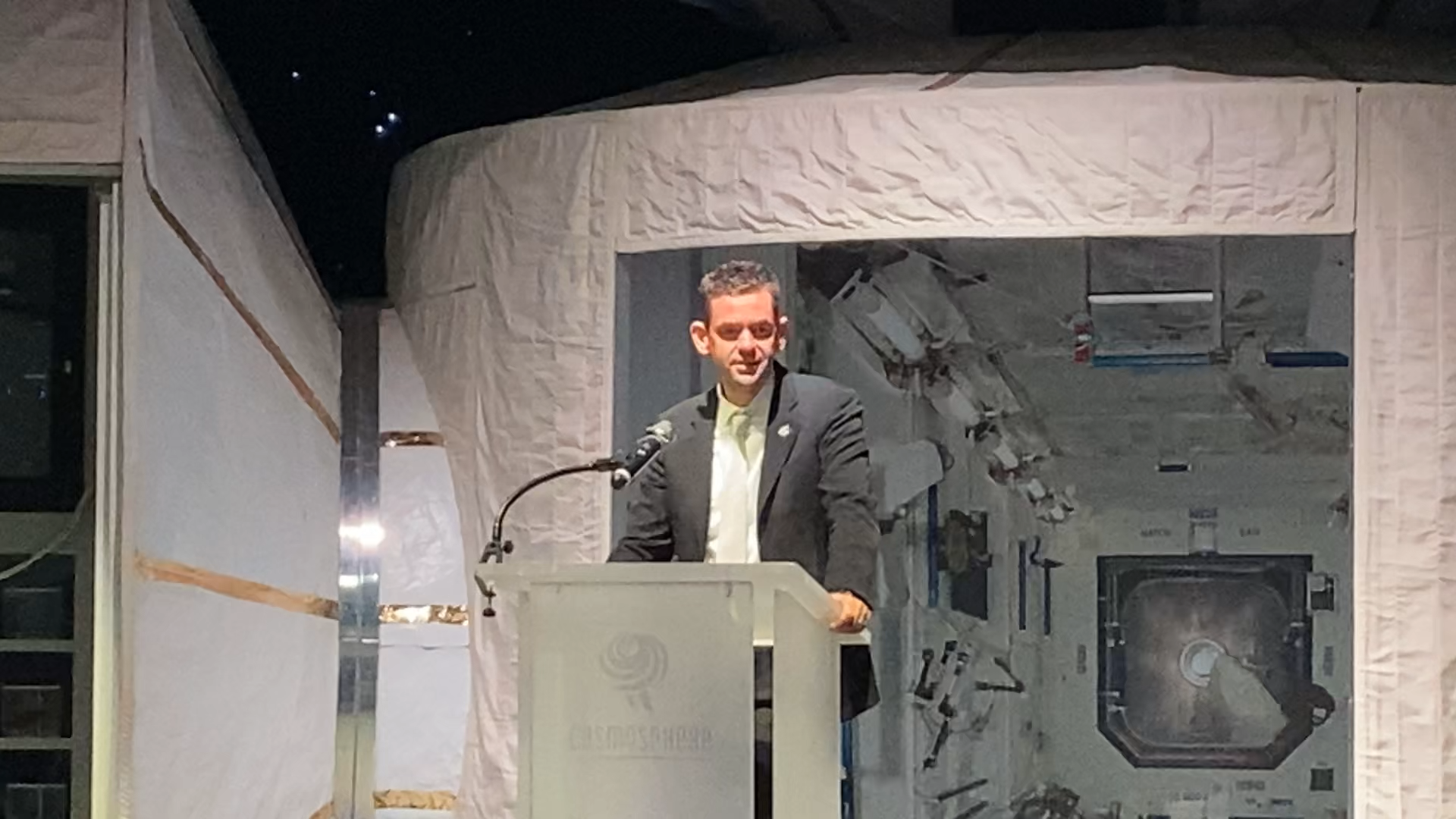
NASA is already preparing for Artemis III, with hardware being assembled and the crew preparing for the mission. Future Artemis missions are intended to build toward a sustained human presence on and around the moon, including development of power, communications, mobility and logistics infrastructure.
That work is also expected to help NASA develop the skills and technology needed for eventual human exploration of Mars.
Isaacman said institutions such as the Cosmosphere have an important role in that effort because historic spacecraft and artifacts demonstrate what can be accomplished through science, engineering and national commitment. He also said artifacts from the Artemis program are expected to eventually take their place alongside Mercury, Gemini and Apollo artifacts at the Cosmosphere.
Moran said space exploration also has practical implications for Kansas beyond putting astronauts on the moon.
He pointed to NASA's ability to provide information during wildfires in southwest Kansas and said NASA science can help agricultural producers improve crop production, manage water resources and protect soil.
Moran said he wants science, mathematics, engineering and research to become another major pillar of the Kansas economy alongside agriculture, aviation manufacturing and energy.
He also stressed the importance of giving young Kansans role models in science and aerospace, specifically noting the opportunity for girls attending the event to meet Koch and see the possibilities available to them.
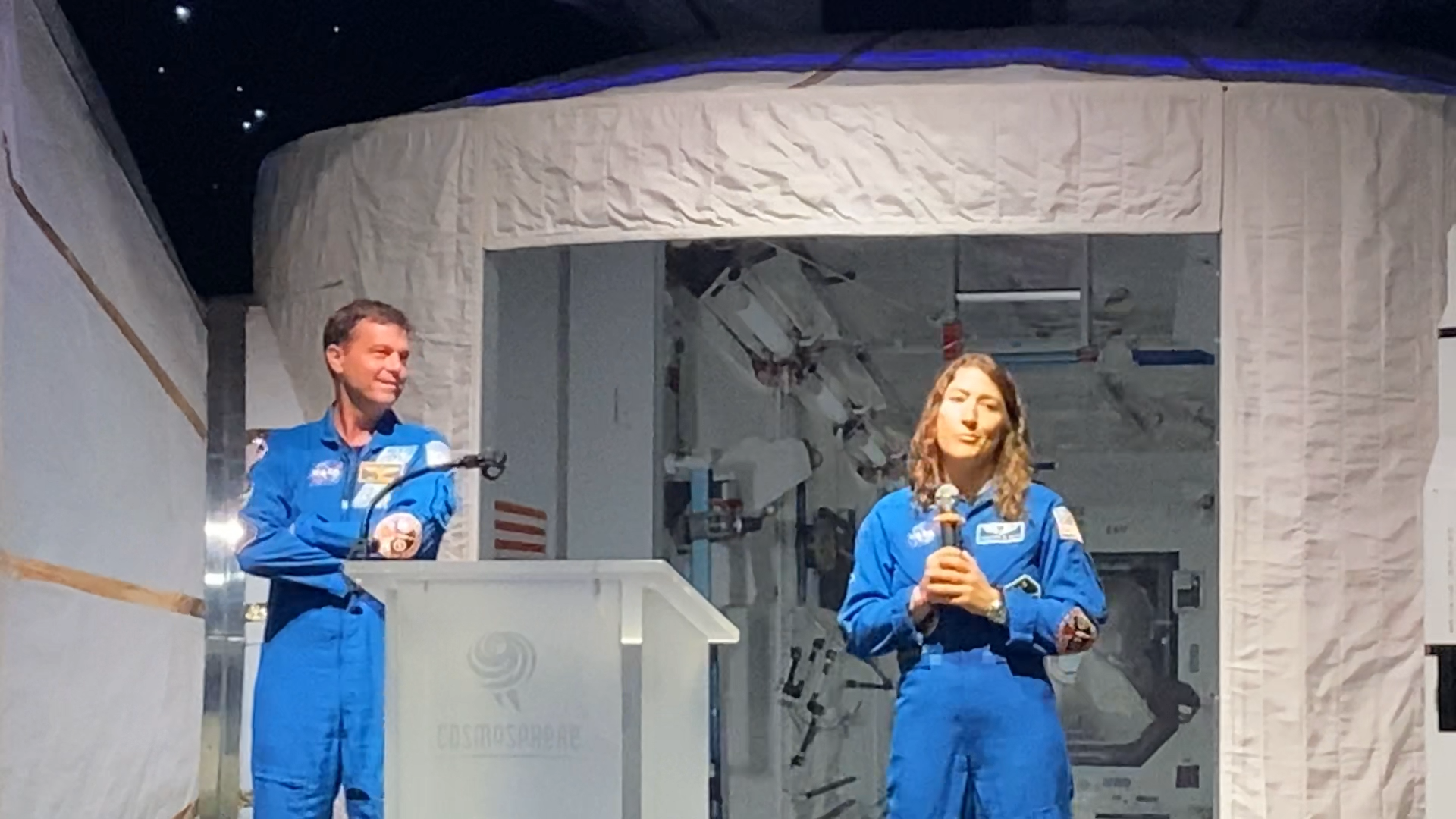
Wiseman and Koch later walked the audience through portions of the Artemis II mission, narrating video and describing what the crew experienced during launch, the journey around the moon and the return to Earth.
Wiseman described the power of the launch and credited the thousands of people responsible for getting the spacecraft safely off the ground. The astronauts also described views of the far side of the moon and the experience of watching Earth become increasingly small as they traveled deeper into space.
At the farthest point of the journey, the astronauts described Earth as appearing about the size of a thumbnail.
The crew also recalled the intensity of returning home. The spacecraft entered Earth's atmosphere traveling about six miles per second, with intense heat and light surrounding the vehicle before its parachutes deployed for splashdown.
Wiseman emphasized that the astronauts were only part of a much larger team responsible for the mission, crediting mission control, engineers and the workers who built and supported the spacecraft.
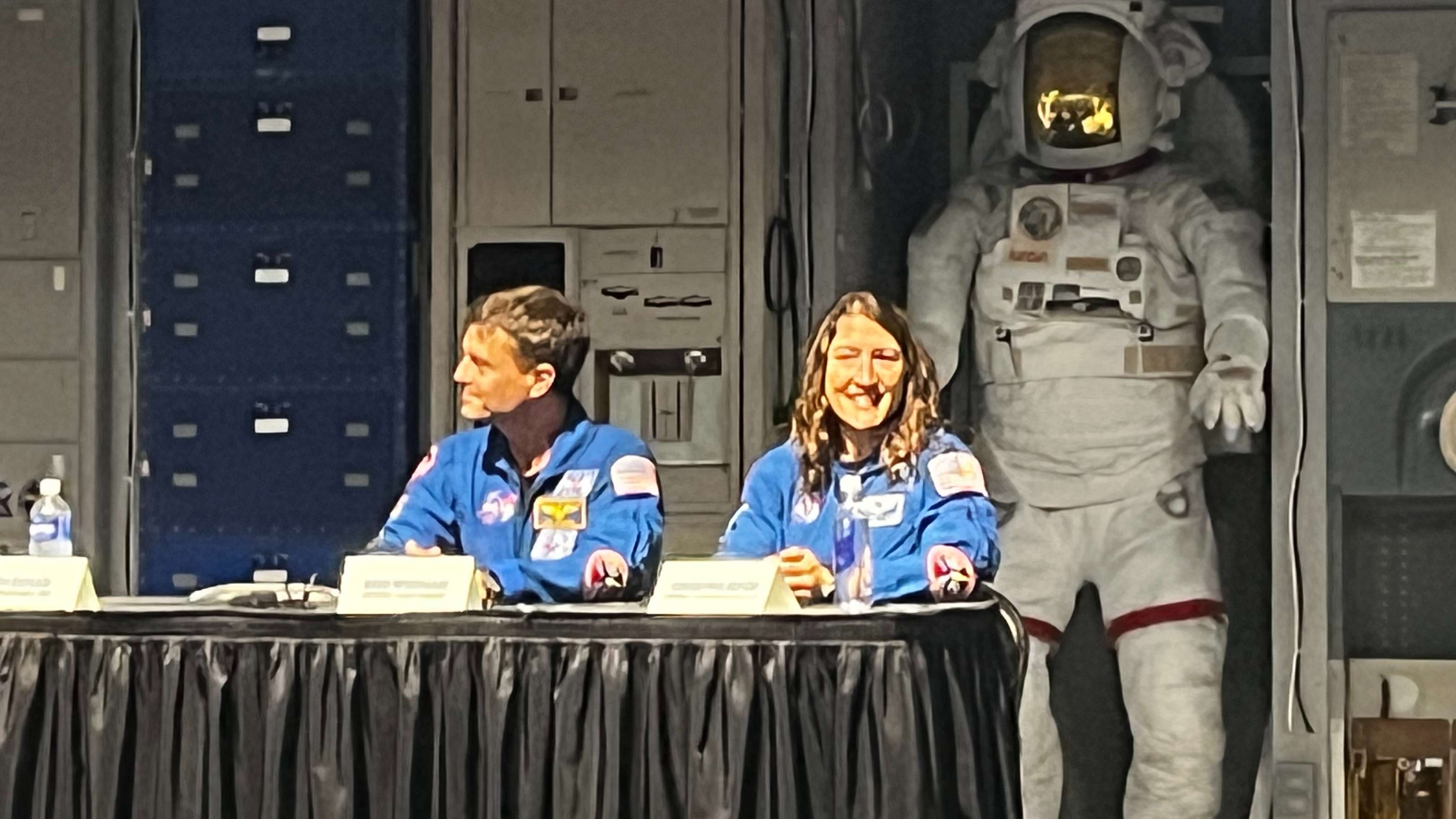
Koch told the audience that while the crew's record-setting distance from Earth received attention, how far astronauts travel is not necessarily the most important measure of a mission.
She said the greater measure is the impact people can make at home and encouraged Kansans to recognize the opportunities they have to contribute to the nation's space program.
The visit continued a relationship between NASA, Moran and the Cosmosphere aimed at connecting the museum's extensive collection of space history with the future of exploration.
For students in attendance Tuesday, the message was that the next chapter of that history could include them.