


By: Morgan Chilson
Kansas Reflector
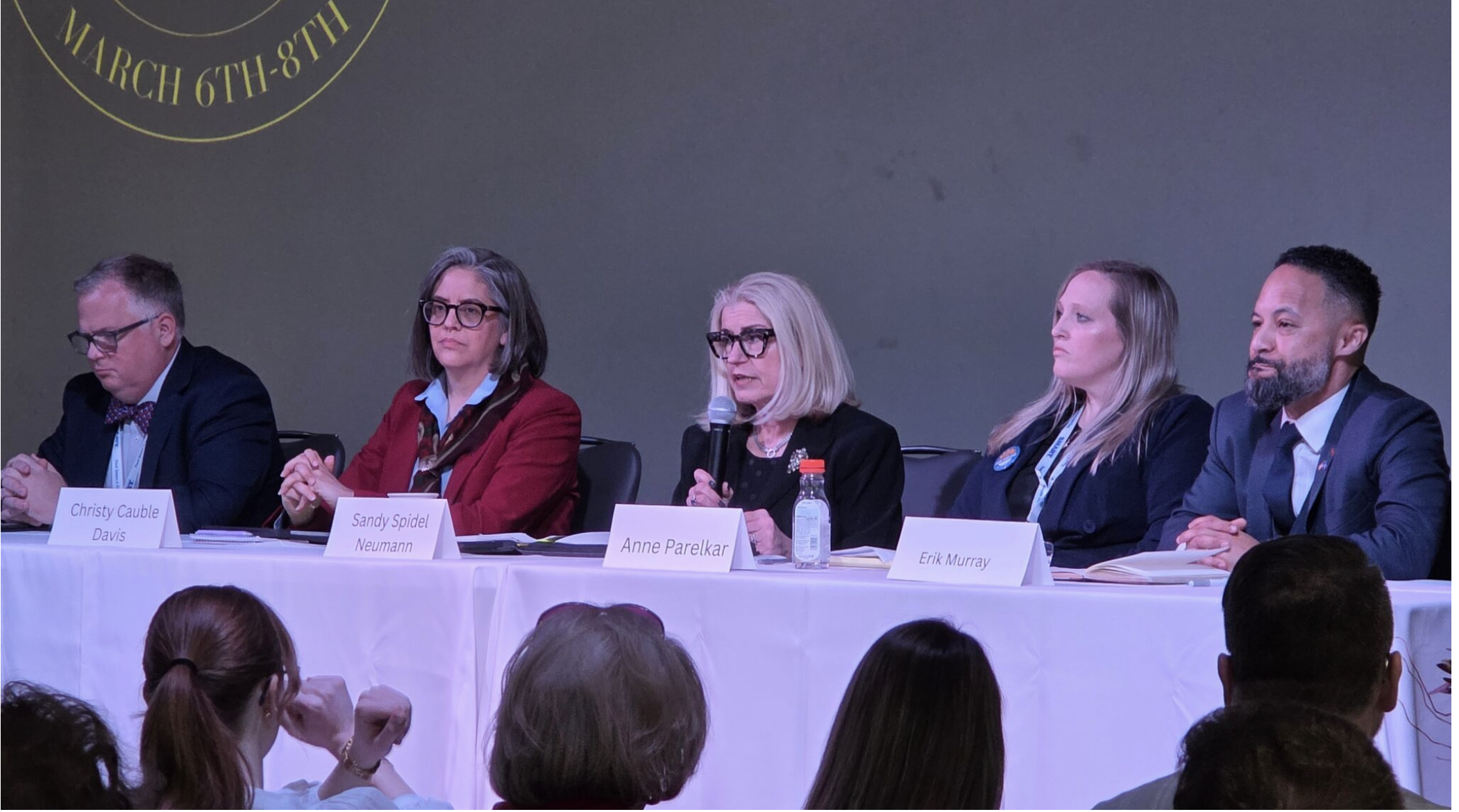
TOPEKA — Five Democratic candidates vying to unseat U.S. Sen. Roger Marshall told more than 150 people Sunday how they will deliver in Washington, D.C., if the state can flip the seat blue.
While sharing their experience and goals for Kansas, the five took a few shots at Marshall. They were on stage during the closing day of the Kansas Democratic Party’s annual meeting, which began Friday at Townsite Topeka.
“I just want you to know I’m ready, willing and able to send Roger Marshall back to Florida for good,” said Sandy Spidel Neumann, who is challenging Marshall for his Senate seat.
Democrats have accused Marshall of living at his second residence in Florida more than his Kansas residence, an accusation Marshall denies.
Spidel Neumann said she made the decision to run, after a long career in financial services, after seeing Marshall storm out of a town hall.
“I saw Roger Marshall’s infamous town hall, and I saw him walk out on Kansans — people that reminded me of my cousins who voted for Trump and Marshall,” she said. “It was so bad that I thought, ‘Oh, hell to the no, you work for us, and we need somebody to fight for us.’ I’m that person.”
The five candidates talked about issues they’ve heard from Kansans as they’ve toured the state, echoing many of the same challenges other candidates spoke about at the convention: education, immigration, health care, tariffs and reproductive rights.
Immigration
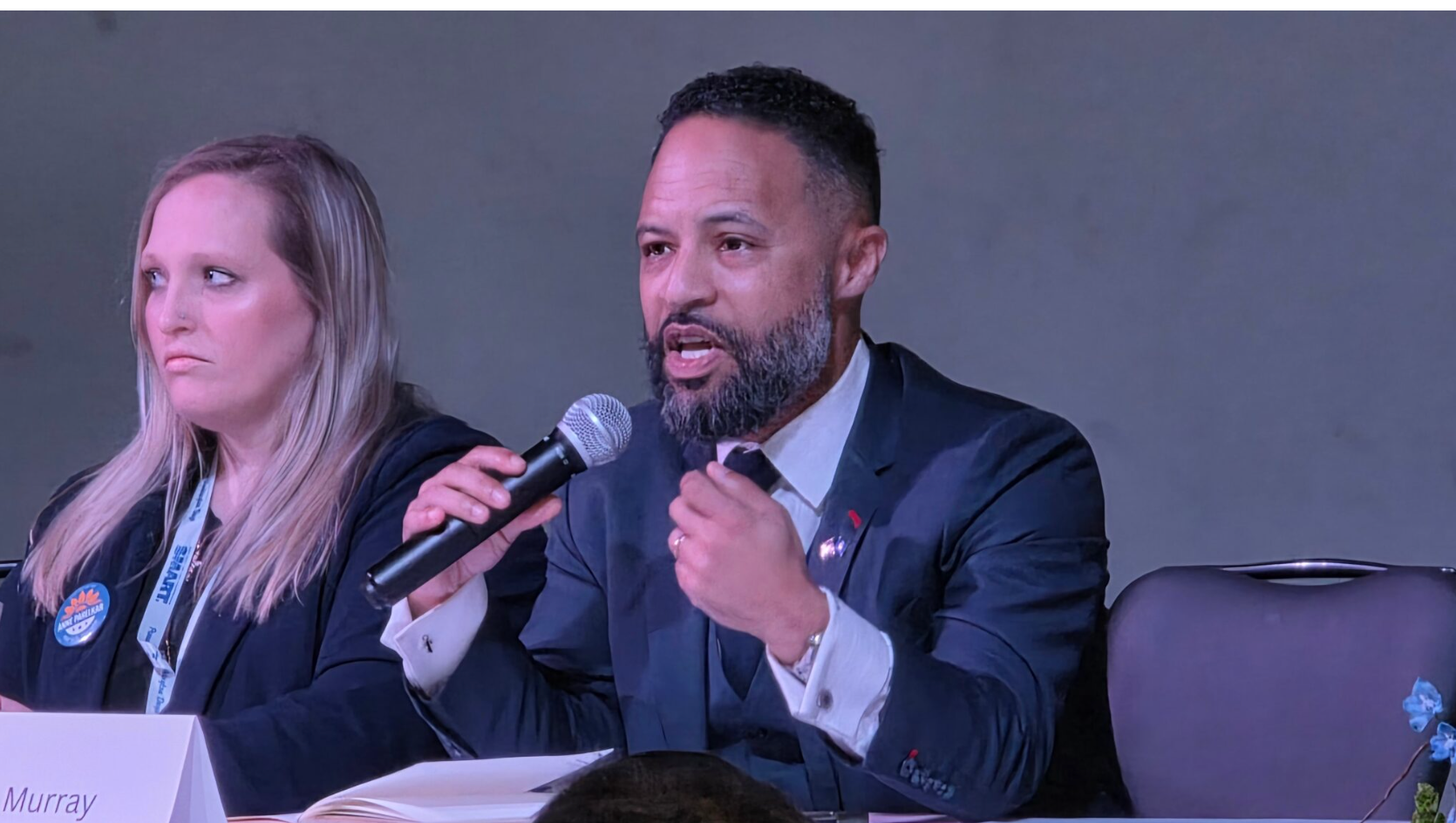
Erik Murray, a real estate developer, said the “politician-created problems,” such as tariffs and tax policies that benefit billionaires, “are tearing apart the fabric of our communities.”
“We know that this is a country of immigrants, and protecting and standing up for folks is what we believe in,” Murray said. “So we’ve got to restore our Kansas values in Washington.”
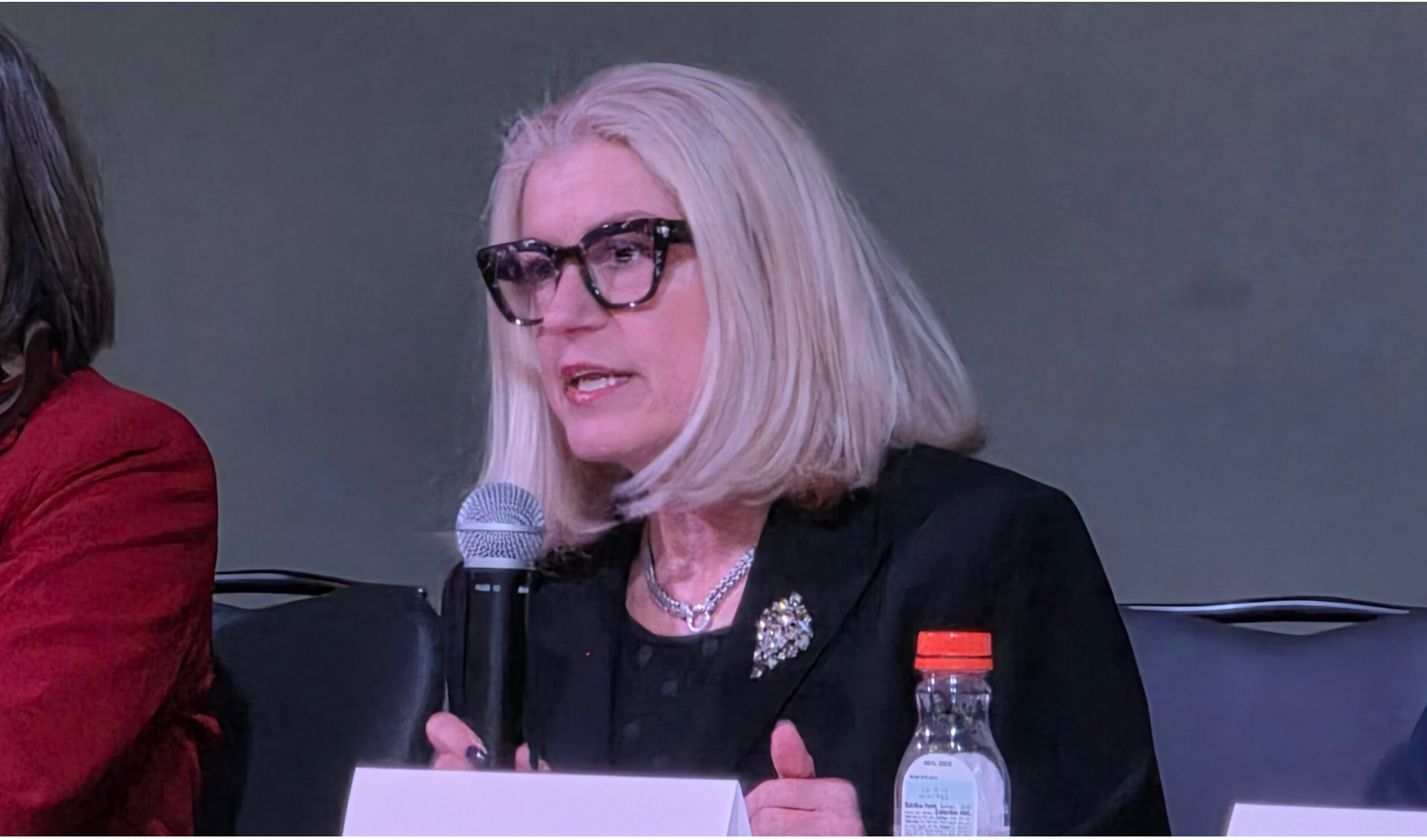
Anne Parelkar, an immigration attorney, called for a full investigation of what U.S. Immigration and Customs Enforcement officers have been doing nationwide.
“The American people need and deserve to see everything that they have done and everything that has gone wrong,” she said. “We deserve the truth, and if that investigation shows us that there isn’t anything in that entity worth saving, then we abolish it, and we use that money for actual immigration reform that serves our people in our country.”
Spidel Neumann called for body cameras, the elimination of masks and better training.
“We need them to have the right goals,” she said, noting that ICE agents have goals set based on the number of arrests, rather than on convictions or other criteria.
Jason Hart, an assistant U.S. district attorney, said his job for 21 years has been “standing in the breach against bullies” for marginalized communities.
“You have to be there and be able to hold their hand, to meet them where they are, and show them that you care and that you are an ally,” he said.
Reproductive rights
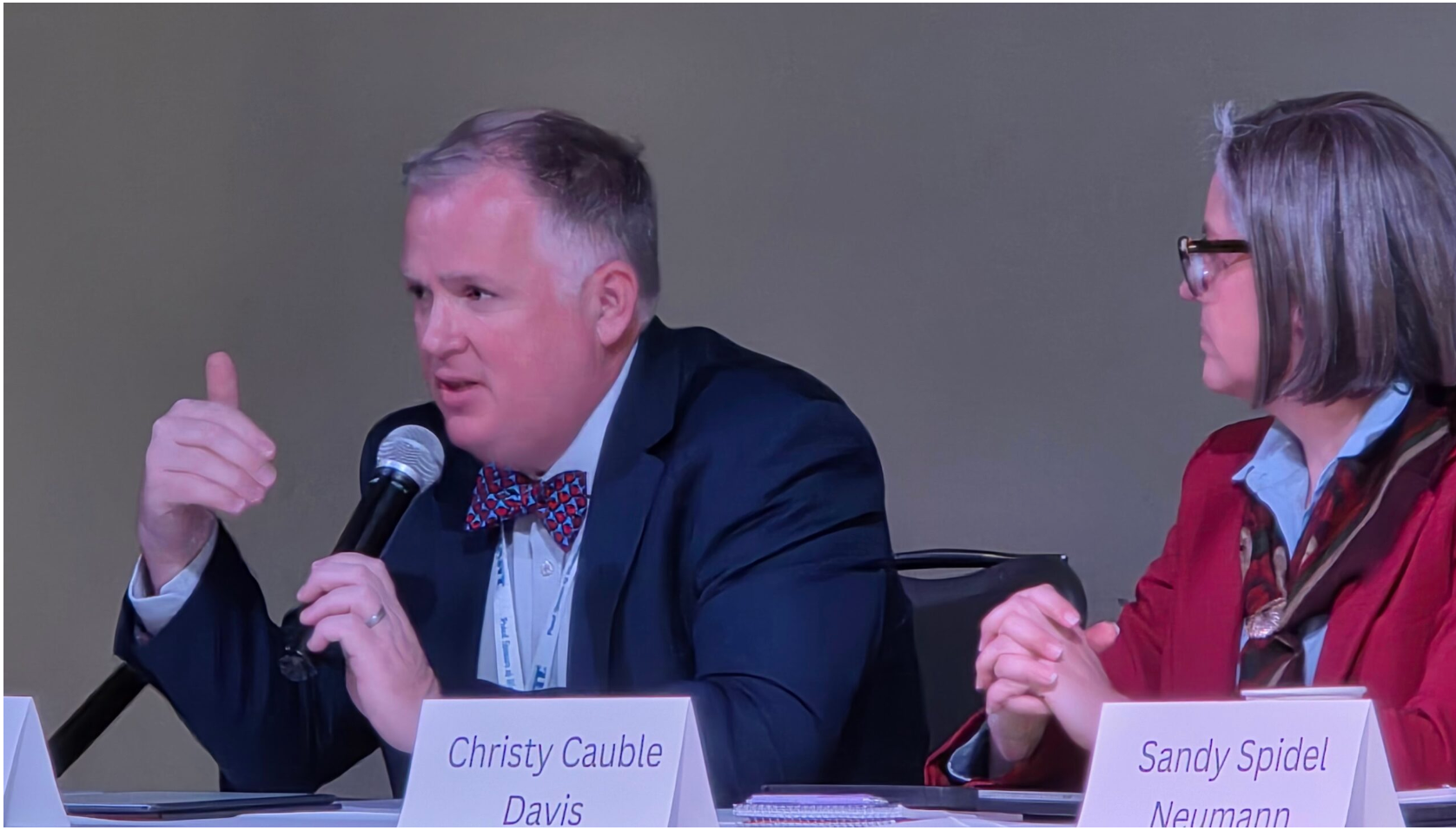
Christy Cauble Davis, a fifth-generation Kansan, said about 20% of the voters in Chase County, where she lives, are registered Democrats. Even with those numbers, her county voted about 50-50 on protecting abortion in the Kansas Constitution.
“What that says to me is we can’t count rural Kansas out,” she said. “We need to work statewide.There are more people who agree on issues than disagree.”
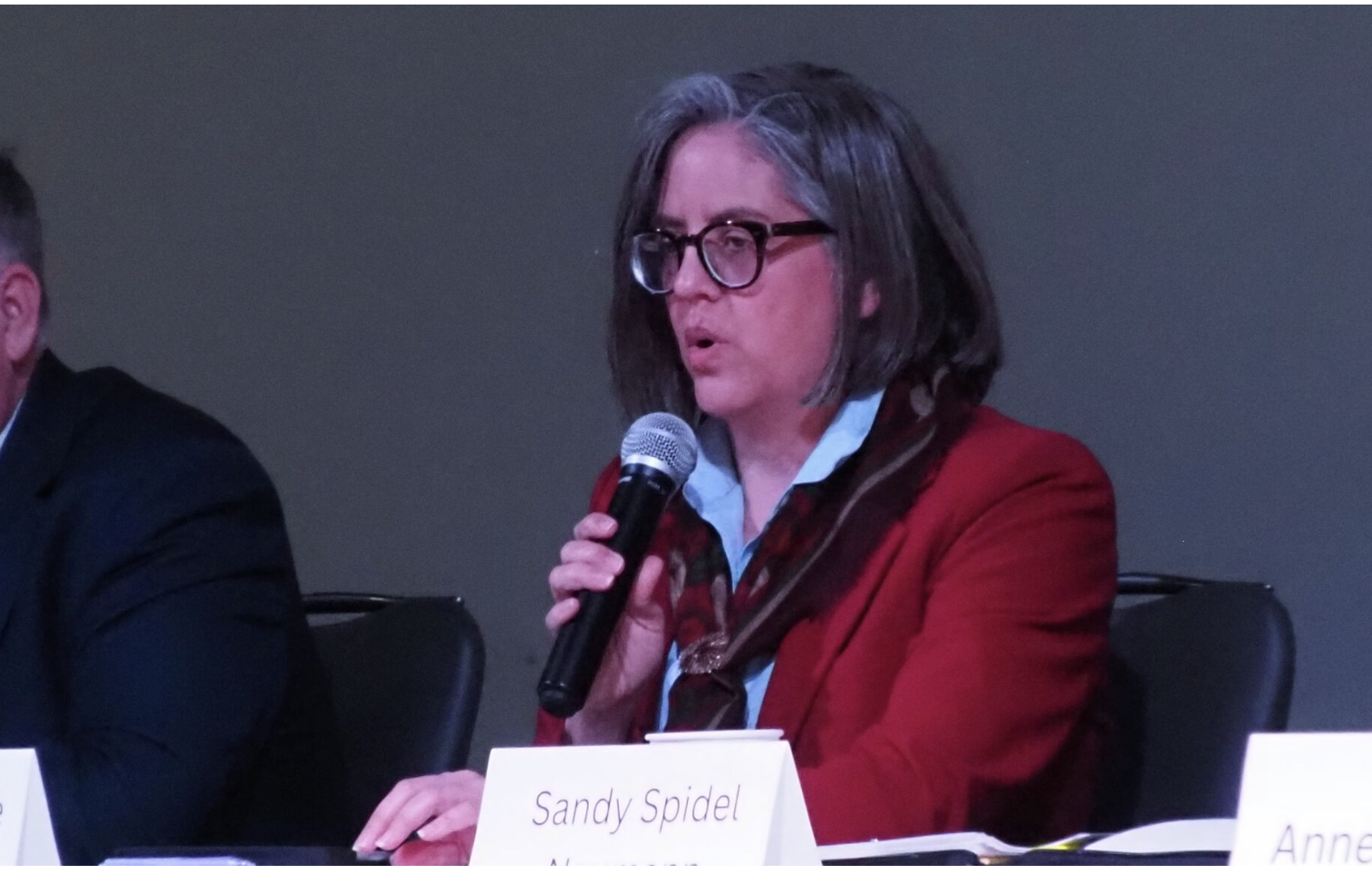
Spidel Neumann said she couldn’t believe Kansas is still debating this issue.
“I am beyond floored by it,” she said. “I’m a pro-choice Catholic. I’m pro women making decisions that they need to make with their doctor, with their family. Politicians should not be involved, and they should stay away from our hoo-has.”
Across the board, the candidates supported women choosing what happens with their bodies.
“We have got to protect women’s rights to make their own decisions about their own bodies,” Murray said. “We do not need the same leaders in Washington that are screwing up everything in this world to be in our doctor’s offices and in our schools and in our hospitals trying to make decisions on behalf of women.”
Working across the aisle
Cauble Davis said she is used to working with hard-line Republicans to find solutions and drew laughter after a comment about Rep. Pat Proctor, a Leavenworth Republican who is well-known for his conservative views.
“I’ve also navigated this landscape in my advocacy work in the state Legislature,” she said. “ I worked with Pat Proctor on an issue that we agreed on. If I’m able, as a woman and a leader, to work with Pat Proctor on issues, I can work with anyone.”
Parelkar said she’s modeling the idea of compromise throughout her campaign, where the idea is to “throw out the idea of an aisle.”
“At my community round tables, which we’re holding in every county in this state, we make it a point to invite everybody, not just the people who agree with us — Democrat, Republican, independent, inexperienced in politics,” she said. “I say throw out the old idea of us vs. them.”
Today, she said, it’s “us vs. the elite.”
It was a sentiment that brought Murray’s full agreement.
“We’re all struggling because of the actions that Washington is taking in our communities,” he said. “All of the lies, all of the division, it’s all a distraction from the grift, right? We need to come together as the 99% of Americans who are not part of that grift, not part of that hate, to realize that we need to work together on solutions.”
As an attorney, Hart said he is used to reaching agreement, and it’s all about the question you ask.
“What are your interests, not your positions,” he said. “Because all we’ve been doing right now is arguing from the corners. Everybody’s staked out a position, and they can’t get in the middle. The middle is where you need to be standing in order to bridge the gap.”
Rural Kansas
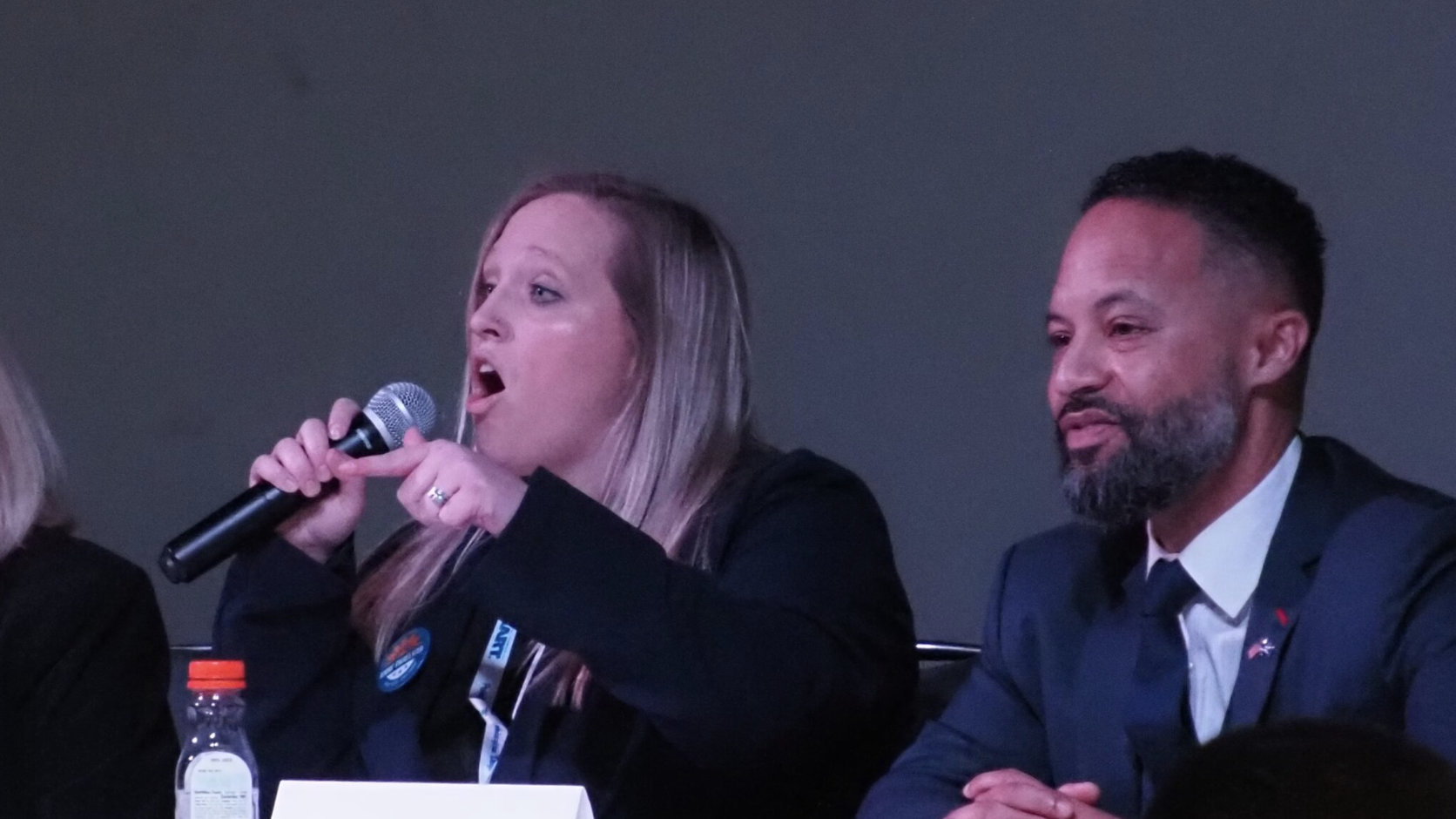
Spidel Neumann said reversing some impacts of the “big abomination of a bill” that cut Medicaid would be a good first step because health care is a significant concern in rural Kansas. She also pointed out the need to get a Farm Bill passed and to stop using tariffs “willy-nilly.”
“That’s not economics. That’s market manipulation,” she said.
Cauble Davis said Democrats need to keep in mind that not everyone in rural communities are farmers or ranchers.
“Only 2% of the folks who live in rural America are engaged in production agriculture,” she said, and issues like health care, mental health care and education are critical in rural communities.
Hart said the most important thing is to show up for rural Kansans.
“How do you bring folks together? You go out and talk to them,” he said. “I ask people questions for a living, and that’s what we need more of, not talking at people. I listen to the experts, and the experts are our Kansas voters, our Kansas constituents, our Kansas communities that can tell us exactly what they need, and then take that and go to D.C. and advocate for them.”