


US defense secretary says Iran is moving military assets but not replenishing
WASHINGTON (AP) At the Pentagon, U.S. Defense Secretary Pete Hegseth told reporters on Thursday Iran is moving around its assets but is unable to replenish its military power almost seven weeks into the war.
The secretary pressed that idea repeatedly in the opening minutes of his morning briefing.
“You can move things around, but you can’t actually rebuild,” Hegseth said, speaking directly to Tehran’s leaders and telling them they no longer have a viable defense industry.
“As you expose yourself with your movement to our watchful eye, we are locked and loaded on your critical dual use infrastructure, on your remaining power generation and on your energy industry,” Hegseth said, telling Iran the war “is not a fair fight” given U.S. power.
Joint Chiefs chairman likens Iran blockade to supermarket parking lot
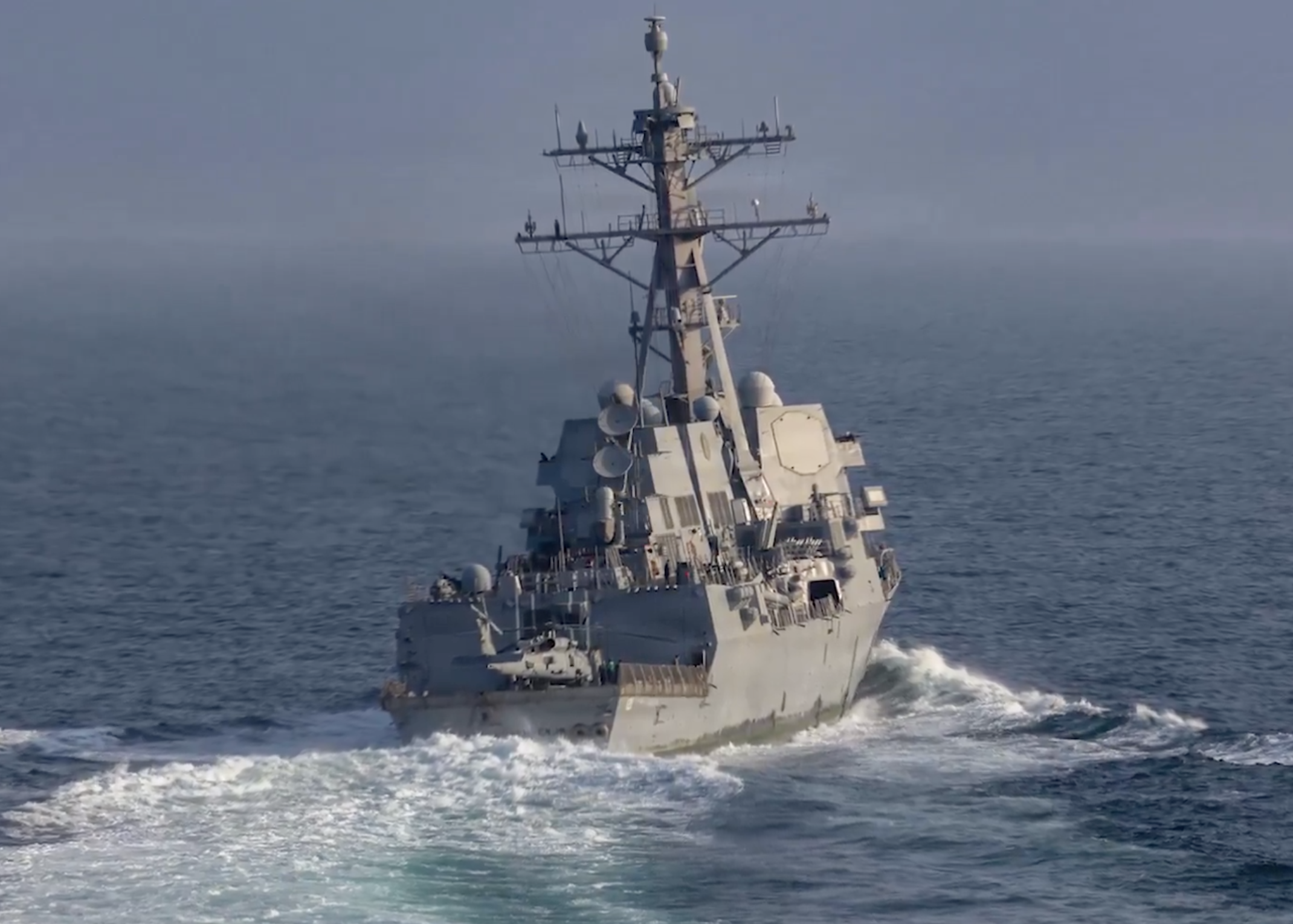
President Trump’s top military advisor described Navy warships maintaining the blockade against Iran “like driving a sports car through a supermarket parking lot on a pay day weekend.”
Gen. Dan Kaine, the Chairman of the Joint Chiefs of Staff, went on to say these maneuvers are being performed “with thousands of kids in that parking lot” as they position themselves to get to ships that would attempt to run that blockade.
Caine says the US will pursue Iranian ships broadly
Speaking at the Pentagon, he said U.S. forces “will actively pursue any Iranian flagged vessel or any vessel attempting to provide material support to Iran” — anywhere in the world.
He issued a clear warning to any targeted vessel attempting to circumvent a U.S. blockade: “Turn around or prepare to be boarded. ... We will use force.”
Caine described the effort as a “blockade of Iran’s ports and coastline” with enforcement “inside Iran’s territorial seas and in international waters.” He noted that U.S. forces in other areas of the world, including the Pacific, also would pursue vessels tied to Iran.
The blockade “applies to all ships, regardless of nationality, heading into or from Iranian ports” and includes “dark fleet vessels carrying Iranian oil.” He defined those as “vessels or those illicit or illegal ships evading international regulations, sanctions or insurance requirements.”
Joint Chiefs chairman says no ships boarded yet under blockade of Iranian ports
Gen. Dan Caine says more than 10,000 sailors, marines and airmen using ships, planes and helicopters are working to enforce the blockade.
Any vessel that approaches the blockade is first warned to turn around or be boarded. Warning shots and other escalatory tactics could also be used, Caine said.
Caine says that so far no ships have had to be boarded.
“Thirteen ships have made the wise choice of turning around,” he said.
Hegseth says Americans ‘see the success’ in Iran, but polling reflects concern
The defense secretary touted public support for the war during remarks at the Pentagon on Thursday, contrasting that with what he said was an overly critical press.
“They see the success. They see the reality. And they don’t demand perfection,” Hegseth said of the public, after criticizing the press.
“You only seek the negative,” Hegseth said of the press.
Hegseth is overstating public support for the conflict. A recent AP-NORC poll shows nearly 60% of Americans say U.S. military action in Iran has been excessive. Meanwhile, 45% are “extremely” or “very” concerned about being able to afford gas in the next few months.
US Navy is using a fraction of its total power to enforce Iran blockade, defense secretary says
Defense Secretary Pete Hegseth said the U.S. navy is employing “less than 10% of America’s naval power” to enforce the blockade against Iran during a briefing Thursday.
“The math is clear. We’re using 10% of the world’s most powerful navy, and you have 0% of your Navy,” Hegseth said.
The Navy currently has 16 warships, including 11 destroyers, three amphibious assault ships, an aircraft carrier, and a littoral combat ship in the Middle East out of a battle force of roughly 300 total warships.